5 Signs Your Garage Door Needs Repair (Before It’s Too Late)
Most garage doors do not fail all at once.
They give warnings first. The problem is those warnings are easy to ignore until the door stops working at the worst possible time.
Around Greer, we see this every week. A door that “was working fine yesterday” usually had signs long before it quit. Catching those signs early is the difference between a simple repair and a much more expensive situation.
Here are the most common red flags we tell homeowners to pay attention to.
1. New Noises You’ve Never Heard Before
A garage door should not be quiet, but it should be familiar.
When a door starts grinding, popping, screeching, or sounding strained, something has changed.
Most of the time, noise comes from:
- Rollers wearing flat
- Dry or failing bearings
- Springs losing tension
- Hardware starting to bind under load
In Greer homes where the garage is the main entry point, doors cycle a lot. That wear adds up. The noise is the system telling you parts are no longer working together smoothly.
2. Slow or Hesitant Movement
If your garage door used to open smoothly and now pauses, jerks, or moves unevenly, that is not an opener problem most of the time.
What we usually find is:
- A door that is out of balance
- Springs that are nearing the end of their cycle life
- Rollers or tracks creating resistance
The opener compensates by pulling harder, which hides the issue temporarily. Over time, that extra strain shortens the life of the opener as well.
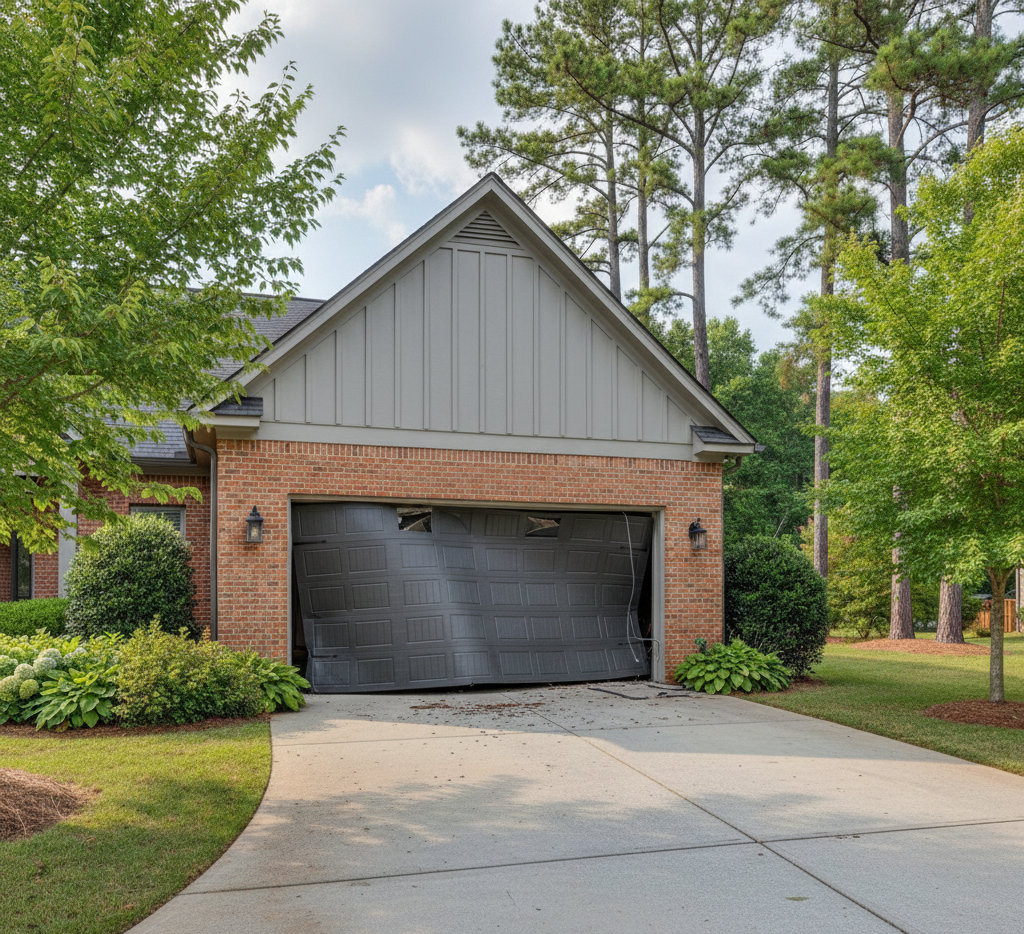
3. The Door Looks Crooked or Uneven
A door that opens at an angle or leaves uneven gaps at the bottom is not just cosmetic.
This often points to:
- Uneven cable tension
- Fraying or stretched cables
- Track alignment issues
Once a door starts traveling unevenly, it rarely corrects itself. Left alone, this is how doors come off track or damage panels.
4. Reversing for No Clear Reason
When a door starts reversing unexpectedly, homeowners often think the opener is failing.
In reality, the opener is doing its job. It is sensing resistance and trying to prevent damage or injury.
Common causes include:
- Binding rollers
- Bent or shifting tracks
- Springs no longer carrying their share of the load
Ignoring this usually leads to a door that eventually will not open at all.
5. The Door Feels Heavier Than It Used To
This is one of the most important signs.
Garage doors are heavy, and springs do the lifting. When springs lose tension or fail, the weight transfers to the opener or to whoever tries to lift the door manually.
If your door suddenly feels heavy, do not force it. That is when injuries and broken components happen.
When to Stop Guessing
Garage door problems rarely get better on their own. Once parts start wearing out of sync, the system continues to stress itself with every cycle.
If your door sounds different, moves differently, or does not feel safe, it is time to have it looked at. Around Greer, we can usually tell very quickly whether a small adjustment will solve the issue or whether a larger repair is coming if it is ignored.